Every time a galvanized member is cut, drilled or welded on site, the zinc coating that was protecting it is destroyed at exactly the point where the steel is now most exposed. The weld bead is bare. The drilled hole is bare. And bare steel inside a galvanized structure corrodes faster than anyone expects, because the surrounding intact zinc keeps the moisture pathway alive.
You cannot re-dip a bridge section, a lamp post or an assembled frame. That is the entire reason zinc rich spray paint exists.
What Zinc Rich Spray Paint Actually Does
Ordinary paint protects by barrier alone: it sits on top of steel and keeps water away. The moment that film is scratched, corrosion starts underneath and creeps outwards.
A zinc rich coating works differently. Zinc is less noble than steel, so in the presence of an electrolyte the zinc corrodes preferentially and the steel underneath does not. This is galvanic or sacrificial protection, the same mechanism as hot dip galvanizing, delivered from an aerosol. A scratch through a zinc rich film does not undercut the way a scratch through ordinary enamel does, because the surrounding zinc keeps protecting the exposed metal.
That distinction matters on site. It is why the industry treats zinc rich coatings as the accepted method for restoring damaged galvanizing rather than as a cosmetic patch.
Why an Aerosol Beats the Alternatives
When galvanizing is damaged after fabrication, the realistic options are re-galvanizing, metallizing, or a zinc rich coating. For repair work the aerosol wins on almost every practical axis.
| Option | Reality on site |
|---|---|
| Re-dip in the galvanizing bath | Requires dismantling and transporting the member. Impossible once erected or assembled. |
| Thermal spray metallizing | Effective, but needs equipment, power and a trained operator. Not viable for a weld seam on a Tuesday. |
| Ordinary grey enamel | Colour matches. Protection does not. Barrier only, no sacrificial action, undercuts at the first scratch. |
| Zinc rich spray paint | Applied in minutes by the fabricator who made the cut, at the moment the damage happens. |
The last row is the real argument. Corrosion protection that is applied late is protection that failed for however long it was missing. An aerosol in the toolbox gets used at the weld; a repair that requires scheduling gets deferred.
Where It Is Used
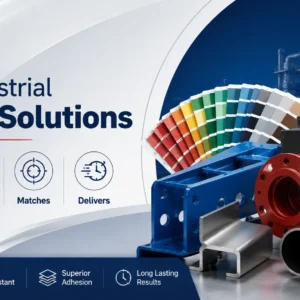
Color-on zinc rich spray is formulated for hot and cold galvanized surfaces, and is used across:
- Steel structures and bridges, at bolt holes, cut ends and field welds.
- Lamp posts and poles, where the base sits in standing water and road salt.
- Railway signals and trackside steelwork, exposed continuously to weather and vibration.
- Fabricated frames and enclosures, anywhere galvanized stock is modified after delivery.
The finish is a grey matt that sits visually close to weathered galvanizing, so a structural repair does not announce itself as a bright patch.
Preparation Decides Whether It Holds
Zinc rich coatings are less forgiving of poor preparation than decorative paint, because sacrificial protection depends on the zinc being in genuine electrical contact with the steel. A layer of grease or scale in between breaks that contact and you are left with an expensive barrier coat.
- Remove weld slag and spatter. Wire brush or grind the seam back to clean metal.
- Take off rust and loose oxide. Abrade to bright steel. Zinc over rust protects nothing.
- Degrease. Cutting fluid, handling oil and marker ink all block contact.
- Feather the surrounding galvanizing so the repair blends into sound coating rather than sitting on top of a hard edge.
- Apply thin, even passes, building film rather than flooding it. Heavy coats trap solvent and cure soft.
Shake the can properly before use. Zinc is dense and settles hard at the bottom; under-agitation is the most common cause of a repair that looks right and performs badly, because the film that came out of the can was resin with very little zinc in it.
Color-on Zinc Rich Spray
Color-on zinc spray is manufactured by Indian Aerosols Pvt Ltd and supplied in a 300 g (approximately 440 ml) aerosol. It uses 99.9% purity zinc, delivers a grey matt anti-corrosive film, and is intended for repair and protection of galvanized steel.
Because every Color-on product is formulated to order, the specification can be matched to your environment: coastal humidity, industrial atmosphere and buried or splash-zone service all place different demands on a coating. If you have a salt spray requirement written into your drawing, send it to us and we will formulate against it rather than against a generic shade card.
Getting the Specification Right
Zinc rich spray is one of eighteen formulations in the Color-on range, and it is not always the right answer on its own. On structures exposed to standing water or aggressive chemistry it is frequently overcoated with a sealer for additional barrier protection. If the damage is on a painted rather than galvanized surface, an acrylic or anti-corrosive system is usually the better match.
For the wider economics of catching damage early rather than reworking it later, see our guide to cutting industrial rework cost with touch up spray paint.
Tell us the substrate, the service environment and the standard you are working to, and we will formulate and colour match to it. Request a quote or call our Delhi office on +91 11 47374737.